



There are plenty of sneaker brands that come and go.
Some become popular because of a new technology. Others become famous after a celebrity starts wearing them. Some have one particularly successful shoe and build an entire marketing campaign around it.
Vans is different.
The brand has been around for decades, yet its shoes still look familiar. You can walk into a sneaker store today and immediately recognize a pair of Vans without needing to see the logo.
The checkerboard pattern, the side stripe, the low-profile shape and the classic canvas styles have become closely associated with the brand.
But what actually makes Vans so popular?
It isn’t just because they look good.
Part of the answer comes from skateboarding. Another part comes from music, streetwear and youth culture. Then there is the simple fact that Vans shoes are relatively easy to wear with everyday clothing.
A pair of Vans can work with jeans, shorts, cargo trousers or casual outfits without requiring much thought.
And perhaps that’s one of the biggest reasons the brand has stayed relevant for so long.
Vans doesn’t always try to make you look like you’re wearing the latest high-tech sneaker.
Instead, the shoes often have a straightforward, recognizable style.
That familiarity has become part of the appeal.
How Did Vans Become So Popular?
To understand Vans’ popularity, it helps to look at where the brand came from.
Vans was founded in California in 1966 by Paul Van Doren, James Van Doren, Gordon Lee and Serge D’Elia. The original company was called the Van Doren Rubber Company.
From the beginning, the business was focused on making and selling shoes directly to customers.
But Vans didn’t become a global sneaker name overnight.
Its connection with skateboarding played a huge role.
During the 1970s, Vans became increasingly associated with Southern California skateboarders. The shoes were practical for the sport, and the brand’s local connection helped it become part of the skateboarding scene rather than simply trying to market itself toward it.
That distinction matters.
Vans wasn’t just selling a shoe to skateboarders.
The shoes became part of the culture.
Over time, that connection helped transform Vans from a small California footwear company into a brand recognized around the world.
Vans and Skateboarding

If you ask why Vans became so culturally important, skateboarding is probably one of the first things that needs to be mentioned.
Skateboarding requires footwear that can handle repeated movement and provide a good connection between the rider and the skateboard.
Vans developed shoes that naturally fit into that environment.
The brand’s simple designs worked well with skateboarding culture because they didn’t look overly technical.
That became part of the identity.
Vans shoes weren’t trying to look like futuristic athletic equipment.
They looked like sneakers.
And skateboarders wore them.
The relationship became stronger as professional skateboarders and skateboarding communities continued to embrace the brand.
This gave Vans something that many fashion brands spend years trying to create: authenticity.
The shoes weren’t simply marketed as “skate-inspired.”
They had an actual history within skateboarding.
That history continues to influence how people perceive the brand today.
The Vans Look Is Easy to Recognize

Another reason Vans became so popular is that the shoes have a very recognizable appearance.
Think about the classic Vans Old Skool.
The low-profile shape, simple upper and distinctive side stripe make it immediately identifiable.
Then there’s the checkerboard pattern associated with styles such as the Classic Slip-On.
You don’t necessarily need a large logo across the shoe to know what you’re looking at.
That is valuable from a branding perspective.
Some sneakers look almost identical to dozens of competitors.
Vans has developed silhouettes that people can recognize from a distance.
And because the designs have remained relatively consistent over time, older styles don’t necessarily look outdated.
That’s an important part of their appeal.
A pair of Vans from several years ago can still look perfectly normal today.
Why Do People Like the Classic Vans Style?

The simplest answer is versatility.
Vans shoes generally have a casual appearance.
You don’t have to think too hard about what to wear with them.
Take a pair of black Old Skool sneakers.
They can work with jeans.
They can work with shorts.
They can work with casual trousers.
They can even fit into certain slightly more dressed-up streetwear outfits.
The same basic idea applies to other Vans styles.
The shoes aren’t trying to dominate an outfit.
They can simply become part of it.
That makes them attractive to people who don’t want to spend a lot of time coordinating their sneakers with everything they wear.
The Appeal of the Old Skool

The Old Skool is arguably one of the most recognizable Vans designs.
It combines a relatively simple sneaker shape with the famous side stripe.
That stripe wasn’t originally created as a fashion statement in the way many people think of it today.
It became part of the brand’s visual identity over time.
Today, the Old Skool can be found in a huge range of colors and materials.
But the basic design remains recognizable.
That’s a clever part of the Vans approach.
The brand can change the colors, materials and collaborations without completely changing the identity of the shoe.
A new version can feel different while still obviously being a Vans.
Why Is the Vans Slip-On So Popular?
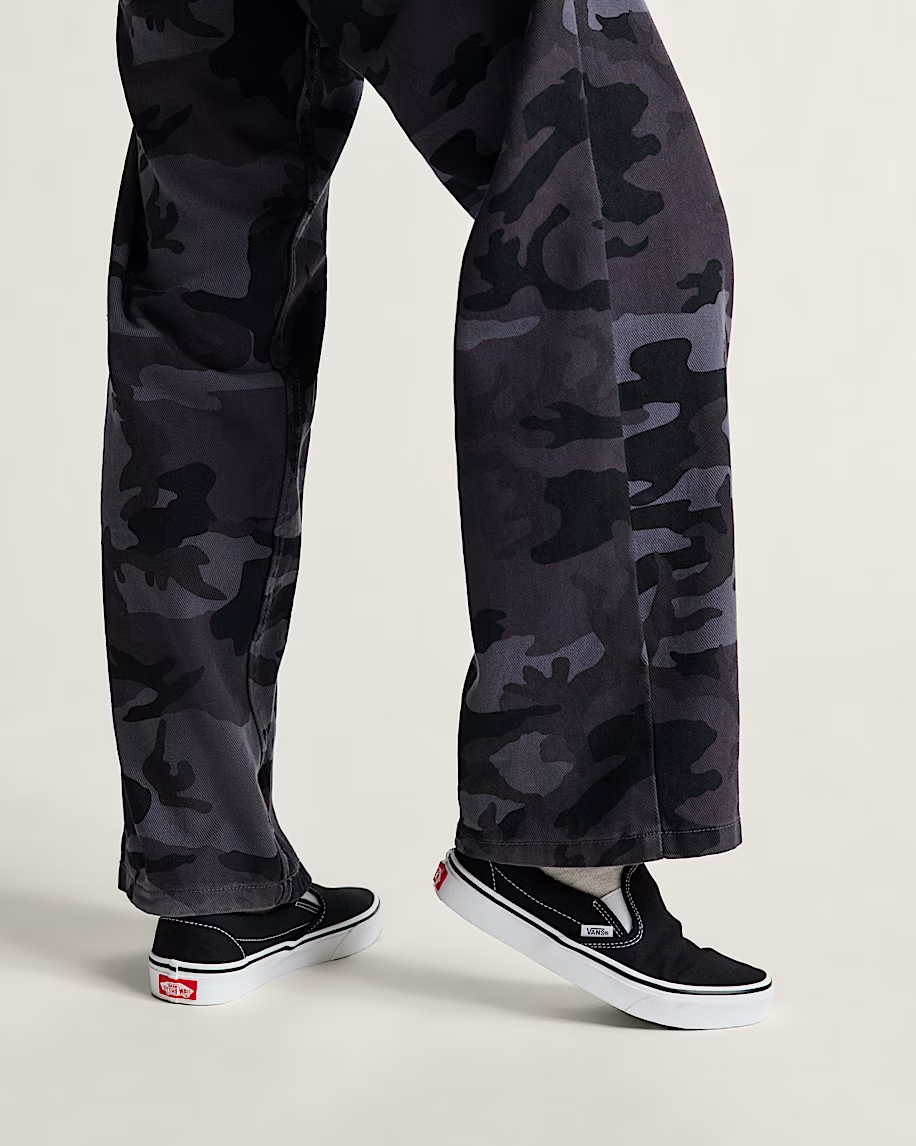
The Classic Slip-On is another major part of the brand’s identity.
There is no complicated lacing system.
You simply put the shoe on.
That makes the design practical, but its popularity is also strongly connected to culture and fashion.
The checkerboard version became particularly recognizable and helped turn the Slip-On into more than just a casual shoe.
It became a style statement.
The design is simple enough to be worn with everyday outfits, but distinctive enough that people notice it.
That balance is difficult for a footwear brand to achieve.
A shoe can be simple and boring.
Or it can be distinctive and difficult to wear.
The classic Vans Slip-On sits somewhere in between.
Vans and Youth Culture

Vans has also benefited from being closely associated with youth culture for decades.
Skateboarding was a major part of that.
But the connection didn’t stop there.
Vans became associated with music, art, streetwear and alternative fashion.
This gave the brand an identity that extended beyond footwear.
A teenager buying Vans wasn’t necessarily buying them because they were the most technically advanced sneakers available.
They were buying into a particular look.
That cultural association is one reason Vans has remained recognizable even as sneaker trends have changed.
Fashion can move quickly.
But brands with a strong cultural identity can survive those changes.
Vans and Music

Music has played an important role in Vans’ broader cultural identity.
The brand became associated with alternative music scenes and events, particularly those connected with younger audiences.
This helped reinforce the idea that Vans wasn’t simply a shoe company.
It was part of a lifestyle.
That distinction is important in fashion.
People don’t always buy a sneaker because of its technical specifications.
Sometimes they buy it because of what the brand represents.
Vans has managed to create that kind of association without abandoning its original identity.
The skateboarding connection remains important, while the brand has also found audiences among people who have never stepped on a skateboard.
Why Do People Who Don’t Skate Wear Vans?

This is probably one of the most interesting parts of Vans’ success.
If the brand’s roots are in skateboarding, why are so many people who have never skateboarded wearing Vans?
Because the shoes moved beyond their original purpose.
This happens with many successful products.
A product starts in a specific community, develops a reputation there and eventually becomes part of mainstream culture.
Vans is a good example.
You don’t have to be a skateboarder to appreciate a simple sneaker.
You don’t need to know anything about skateboarding to like the Old Skool.
And you don’t have to be part of an alternative music scene to wear a checkerboard Slip-On.
The cultural background gives the shoe character, but the everyday design makes it accessible to almost anyone.
Vans Are Relatively Easy to Style

Another reason for the brand’s popularity is that most Vans designs are casual enough to fit into everyday wardrobes.
You can wear them with a simple T-shirt and jeans and the outfit works.
You can wear them with shorts during warmer weather.
You can combine them with streetwear pieces if you want a more fashion-focused look.
This versatility is particularly useful for people who don’t want a different sneaker for every type of casual outfit.
A neutral pair of Vans can become an everyday shoe.
And once someone finds a sneaker that works with most of their wardrobe, they have a reason to keep buying from the same brand.
Are Vans Fashion or Skate Shoes?

The answer is both.
That is another reason the brand is interesting.
Vans still has a strong connection to skateboarding, and it continues to produce footwear designed around skateboarding.
At the same time, the brand is firmly established in mainstream fashion.
You can find Vans in skate shops, sneaker stores and fashion retailers.
That gives the brand a wider audience than it might have had if it remained strictly focused on skateboarding.
For some customers, the skateboarding heritage is the main attraction.
For others, it’s simply a nice part of the brand story.
And for many people, it probably doesn’t matter at all.
They just like how the shoes look.
Why Vans Don’t Feel Like a Passing Trend

Sneaker trends change constantly.
One year, chunky shoes are everywhere.
Then minimalist sneakers come back.
Then retro running shoes become popular.
Then another style takes over.
Vans has managed to survive these cycles because its classic designs aren’t entirely dependent on a particular trend.
They have become recognizable in their own right.
That doesn’t mean every Vans style will always be fashionable.
Some collections will obviously be more popular than others.
But the core silhouettes have a level of familiarity that protects them from becoming completely irrelevant when trends change.
That’s a major advantage for a brand.
The Emotional Side of Vans

There is also something nostalgic about Vans.
For people who grew up seeing the shoes in skate shops, music venues or on friends at school, the brand can bring back memories.
Someone may have owned their first pair as a teenager and still buy Vans years later.
That creates something beyond the physical product.
It’s familiarity.
You know what the shoes look like.
You know how they fit into your wardrobe.
You know what the brand represents.
And when a company can create that kind of relationship with customers, it becomes much easier to maintain loyalty.
Previously, we looked at where Vans came from and why its connection with skateboarding, music and youth culture helped turn the brand into something much bigger than a skate shoe company.
But culture alone can’t keep a footwear brand popular for decades.
People still have to like wearing the shoes.
That’s where comfort, design, versatility and value come into the picture.
Vans has built a reputation around relatively simple sneakers that can be worn with everyday clothes. Some people love that straightforward approach, while others find traditional Vans designs less comfortable than modern athletic sneakers.
So, are Vans actually comfortable?
Are they good for everyday wear?
And do they offer enough value to justify buying them when there are so many sneaker brands available today?
Let’s take a closer look.
Are Vans Comfortable?

Comfort is probably one of the most debated parts of the Vans experience.
If you’re used to running shoes with thick cushioning, soft foam and highly engineered midsoles, a classic Vans sneaker can feel quite different.
Traditional Vans styles generally have a flatter, more casual construction.
That’s part of their identity.
The flatter sole can provide a stable feeling, which is one reason Vans became popular among skateboarders. But the same construction isn’t necessarily what everyone wants from an all-day walking shoe.
Someone who wears Vans for a few hours around town may find them perfectly comfortable.
Someone who spends eight or ten hours walking on hard surfaces might prefer a sneaker with more cushioning and dedicated support.
This doesn’t mean Vans are uncomfortable.
It means comfort depends on the person, the model and how you use the shoe.
That’s an important distinction.
Vans for Everyday Wear

This is where Vans perform particularly well.
They’re casual.
They’re recognizable.
And they’re easy to combine with ordinary clothes.
You don’t need to be going somewhere special to wear them.
A pair of black Vans can work for a normal day at college, shopping, meeting friends or simply walking around town.
The same is true for classic white or neutral-colored styles.
Their understated appearance makes them useful as everyday sneakers.
That’s probably one reason people often own more than one pair.
Once you find a style that works with your wardrobe, buying another color doesn’t feel like starting from scratch.
Why the Simple Design Works

One of the interesting things about Vans is that the shoes don’t necessarily look technologically advanced.
There are no enormous visible air units on a classic Old Skool.
There isn’t an oversized foam midsole.
You don’t get the same “performance sneaker” appearance that you see from many running brands.
Yet that’s exactly why some people like them.
Vans shoes have a familiar, uncomplicated appearance.
They look like sneakers.
That makes them easy to wear without making the footwear the entire focus of an outfit.
For people who prefer classic fashion rather than constantly following sneaker trends, this can be a major advantage.
Vans and Different Outfits
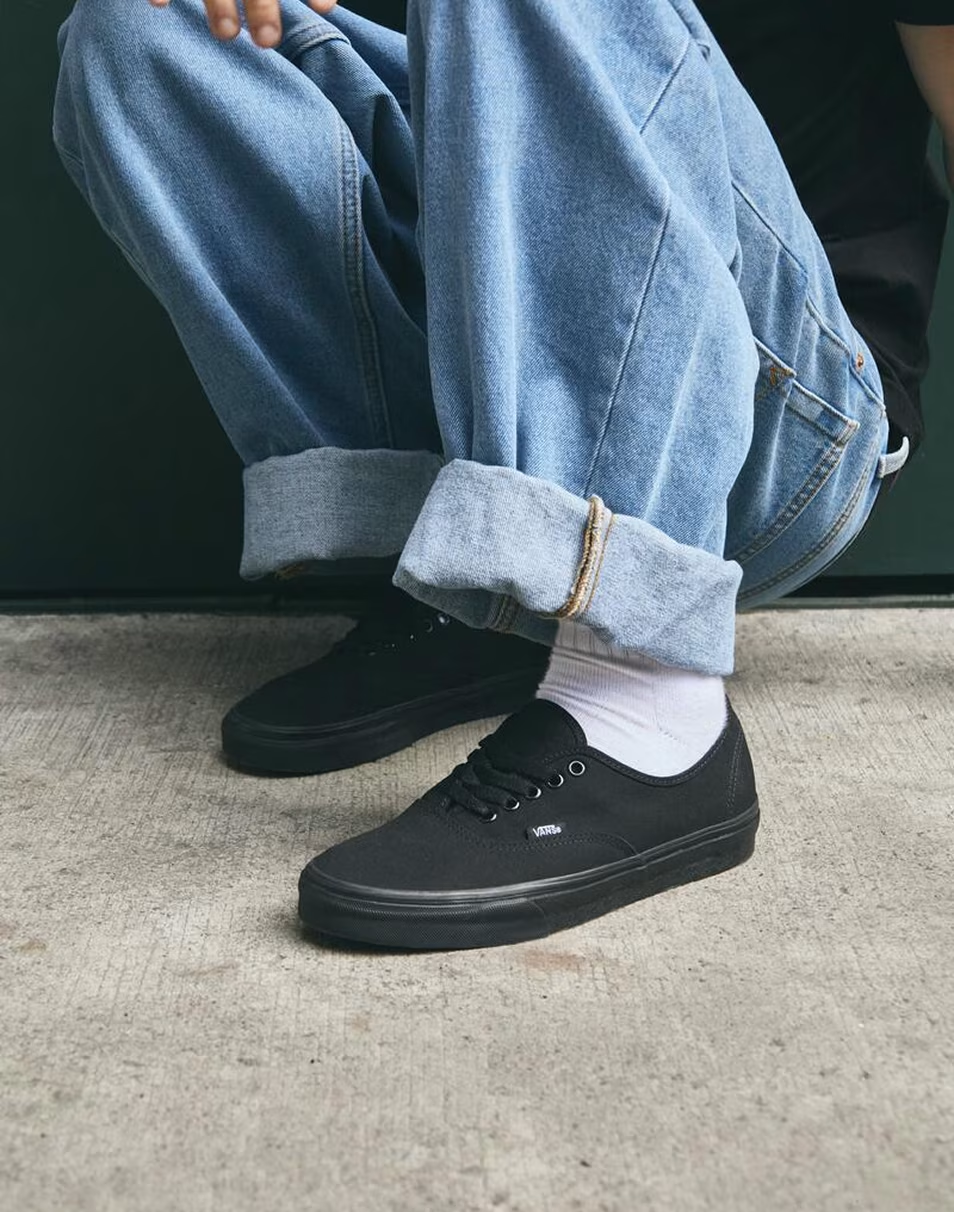
A good everyday sneaker needs to work with more than one outfit.
That’s another area where Vans have done well.
Take a classic black-and-white pair.
You could wear them with jeans and a T-shirt.
You could wear them with shorts.
You could pair them with cargo trousers and a hoodie.
You could even use them with a more carefully styled streetwear outfit.
The shoe doesn’t demand a particular look.
Instead, it adapts to the clothes around it.
That’s useful because most people don’t want to buy a completely different pair of shoes every time they change their outfit.
A versatile sneaker can do much more work.
Vans for Men

Vans has a broad selection of styles that work well for men’s casual wardrobes.
The Old Skool is probably one of the easiest choices for everyday wear.
The Authentic has a simpler appearance, while the Slip-On removes laces completely.
Then there are skate-focused models and different seasonal collections that change the materials, colors and construction.
The important thing is that there isn’t one “best” Vans shoe for every man.
Someone who prefers a minimal sneaker may like the Authentic.
Someone who wants the recognizable side stripe may prefer the Old Skool.
Someone who wants easy on-and-off footwear might choose the Slip-On.
That variety is part of the brand’s appeal.
Vans for Women

The same flexibility applies to women’s fashion.
Vans can work with jeans, shorts, casual dresses, skirts and a variety of streetwear outfits.
Some people prefer classic low-top styles, while others choose platform versions or more fashion-focused releases.
Again, the biggest advantage is versatility.
You don’t necessarily need to build an entire outfit around Vans.
The shoes can simply become part of the outfit.
That makes them particularly appealing to people who like casual fashion but don’t want their sneakers to look overly sporty.
Vans for Teenagers and Young Adults

This is another major part of Vans’ popularity.
The brand has a long connection with youth culture.
Its skateboarding background, music associations and casual designs all fit naturally into the way many younger customers dress.
But there is also a practical reason.
Vans are recognizable without being overly formal.
A teenager can wear them to school, while hanging out with friends, at a concert or simply around town.
The brand also offers enough colors and patterns to allow people to express their own style.
Someone might choose a completely black pair.
Another person might want checkerboard.
Someone else might prefer a bright color.
The underlying shoe can remain recognizable while the individual style changes.
Are Vans Good for Walking?

This is where I would be a little more careful.
Vans can certainly be used for everyday walking, but that doesn’t mean every Vans model is ideal for long-distance walking.
Classic Vans weren’t primarily designed to compete with modern running and walking shoes when it comes to maximum cushioning.
If you’re walking around a city for a few hours, you may find them perfectly fine.
If you’re planning an entire day of sightseeing involving many miles of walking, you may prefer a sneaker specifically designed for walking comfort.
This is particularly important if you already know that your feet are sensitive to firm or relatively flat footwear.
The best way to think about Vans is as casual lifestyle shoes with skateboarding roots, rather than dedicated walking or running shoes.
That distinction helps set realistic expectations.
Are Vans Good for Travel?
They can be.
For normal travel days, Vans are convenient because they work with a lot of casual clothing.
If you’re packing light, a versatile sneaker is useful.
One pair that works with jeans, shorts and casual evening clothes can save space in your luggage.
But there’s an important limitation.
If your trip involves walking all day, every day, comfort should come first.
A sneaker that looks great in airport photos isn’t necessarily the sneaker you want after walking around a European city for 20,000 steps.
Some Vans models offer more cushioning than traditional styles, so choosing the right model can make a difference.
But if walking is going to be the main activity of your trip, a purpose-built walking or running shoe may still be the better choice.
How Durable Are Vans?

Durability is another area where the answer depends on how you use them.
Vans shoes are associated with skateboarding, so the brand has experience making footwear that needs to handle repeated movement and contact with skateboards.
However, classic lifestyle models can show wear over time, especially if you use them heavily.
Canvas uppers can become dirty.
The outsole can wear down.
The heel area may eventually show signs of repeated use.
That’s normal for sneakers.
The important question is whether the shoe lasts long enough for the price you paid.
For casual use, many people can get plenty of wear from a pair of Vans.
For heavy daily use, your mileage will vary.
How often you wear them, where you walk, how you treat the shoes and which model you buy can all affect their lifespan.
Why Vans Don’t Try to Compete With Every Sneaker Brand

This is actually one of the reasons I think the brand has remained successful.
Vans doesn’t need to be the best running shoe.
It doesn’t need to have the most advanced cushioning.
It doesn’t need to create a futuristic sneaker every season.
Its strength is elsewhere.
Vans has a recognizable identity.
That identity is built around skateboarding, casual fashion and classic sneaker designs.
Trying to become everything for everyone could actually weaken that identity.
Instead, the brand can focus on what customers already associate with it.
That consistency is valuable.
Are Vans Expensive?

Compared with premium fashion sneakers, Vans are generally positioned as relatively accessible.
But “affordable” depends on the specific model.
Classic designs can be reasonably priced, while special collections, collaborations and more technically developed models can cost more.
This creates a fairly broad range.
Someone can buy a basic pair without spending luxury-sneaker money.
At the same time, someone who wants a limited or premium design can spend considerably more.
I think that flexibility works in Vans’ favor.
The brand can appeal to someone buying their first pair while also giving longtime fans reasons to purchase something different.
Do Vans Offer Good Value?
For many people, yes.
But value isn’t simply about how cheap the shoe is.
A $50 sneaker isn’t good value if you don’t enjoy wearing it.
A $90 sneaker might be good value if you wear it several times a week for years.
With Vans, the value comes from a combination of recognizable style, versatility and the ability to wear the shoes across different situations.
If you want one casual sneaker that works with most of your wardrobe, Vans can make sense.
If you need maximum cushioning for long walks, there are probably better options.
Again, the key is buying the right shoe for the right purpose.
Vans Compared With Modern Running Shoes

This is where expectations matter.
Modern running shoes are designed around performance.
They often use specialized foams, engineered uppers and carefully developed cushioning systems.
Vans’ classic lifestyle sneakers are not trying to do the same thing.
So comparing a Vans Old Skool directly with a dedicated running shoe isn’t particularly useful.
The running shoe will probably win for running.
The Vans may win if you’re looking for a classic casual sneaker that works with jeans and streetwear.
It’s a different category.
The same principle applies to many fashion products.
A product doesn’t have to be the best at everything to be good at what it was designed to do.
Why People Keep Buying the Same Vans Style
This is one of the strongest signs of brand loyalty.
Once someone finds a pair of Vans that fits their style, they may simply buy another pair when the old ones wear out.
There’s no learning curve.
They already know what the shoe looks like.
They know what clothes they can wear with it.
They know roughly how it feels.
And they don’t need to search through dozens of brands looking for something completely different.
That’s the advantage of a classic design.
It becomes familiar.
Vans and Personal Style

Perhaps the biggest reason Vans remain popular is that they don’t force one particular fashion identity on the person wearing them.
You can make them look different depending on the rest of your outfit.
A black Old Skool can look understated.
A checkerboard Slip-On can make an outfit more noticeable.
A colorful pair can become the main feature.
A simple white pair can almost disappear into the outfit.
That flexibility gives customers room to make the shoes their own.
And fashion products that allow personal expression tend to have longer-lasting appeal.
Vans has already proved that it can make a recognizable sneaker.
But recognizable doesn’t always mean culturally important.
There are plenty of brands people know without feeling particularly connected to them.
Vans has managed to build something different.
Over the years, the brand has become connected with skateboarding, music, streetwear, art and youth culture. That cultural connection is a big reason the shoes can appeal to people who have never skateboarded and may not even think of themselves as sneaker enthusiasts.
A pair of Vans can be just a pair of casual shoes.
But it can also represent a certain style.
That’s a big part of the brand’s staying power.
Vans and Streetwear Culture
Streetwear has changed considerably over the years.
What was once associated mainly with skateboarding, hip-hop and youth subcultures eventually became a major part of mainstream fashion.
Vans fit naturally into that transition.
Their relatively simple silhouettes work well with oversized clothing, denim, hoodies, cargo trousers and other casual pieces commonly associated with streetwear.
And unlike some trend-driven sneakers, Vans don’t require an entire outfit to be built around them.
A person can wear a pair of Old Skools with a very simple outfit and still get that casual streetwear look.
This accessibility matters.
Not everyone wants a $200 or $300 statement sneaker.
Sometimes people just want a recognizable shoe that works.
Vans has been very good at filling that space.
Why Vans Feel Authentic

The word “authentic” gets used constantly in fashion marketing, so it can lose its meaning.
But Vans has a legitimate history behind its image.
The brand didn’t start by pretending to be part of skateboarding culture.
Skateboarders actually adopted the shoes.
That history gave Vans credibility.
As the brand grew, it could enter mainstream fashion without completely losing its connection to where it came from.
That’s difficult for a company to achieve.
A brand can become too commercial and lose the community that originally made it interesting.
Vans has faced that challenge like every major lifestyle brand, but its skateboarding identity remains a visible part of the company.
That connection gives the classic shoes a story.
And people often value products with a story more than products that simply look good.
Vans Collaborations Keep the Brand Interesting

Another reason Vans continues to attract attention is its willingness to collaborate.
The brand has worked with designers, artists, entertainment properties and other companies over the years.
Collaborations allow a familiar sneaker to feel new without completely changing its identity.
That’s useful because the classic Vans styles are already well established.
A new collaboration can take a recognizable silhouette and give it a different color combination, artwork, material or story.
For collectors, that creates another reason to pay attention.
For ordinary customers, collaborations can simply make a familiar shoe more interesting.
Not every collaboration will appeal to everyone.
That’s actually part of the point.
The brand can experiment while continuing to sell the classic designs that built its reputation.
Why Vans Are Still Popular Despite New Sneaker Brands
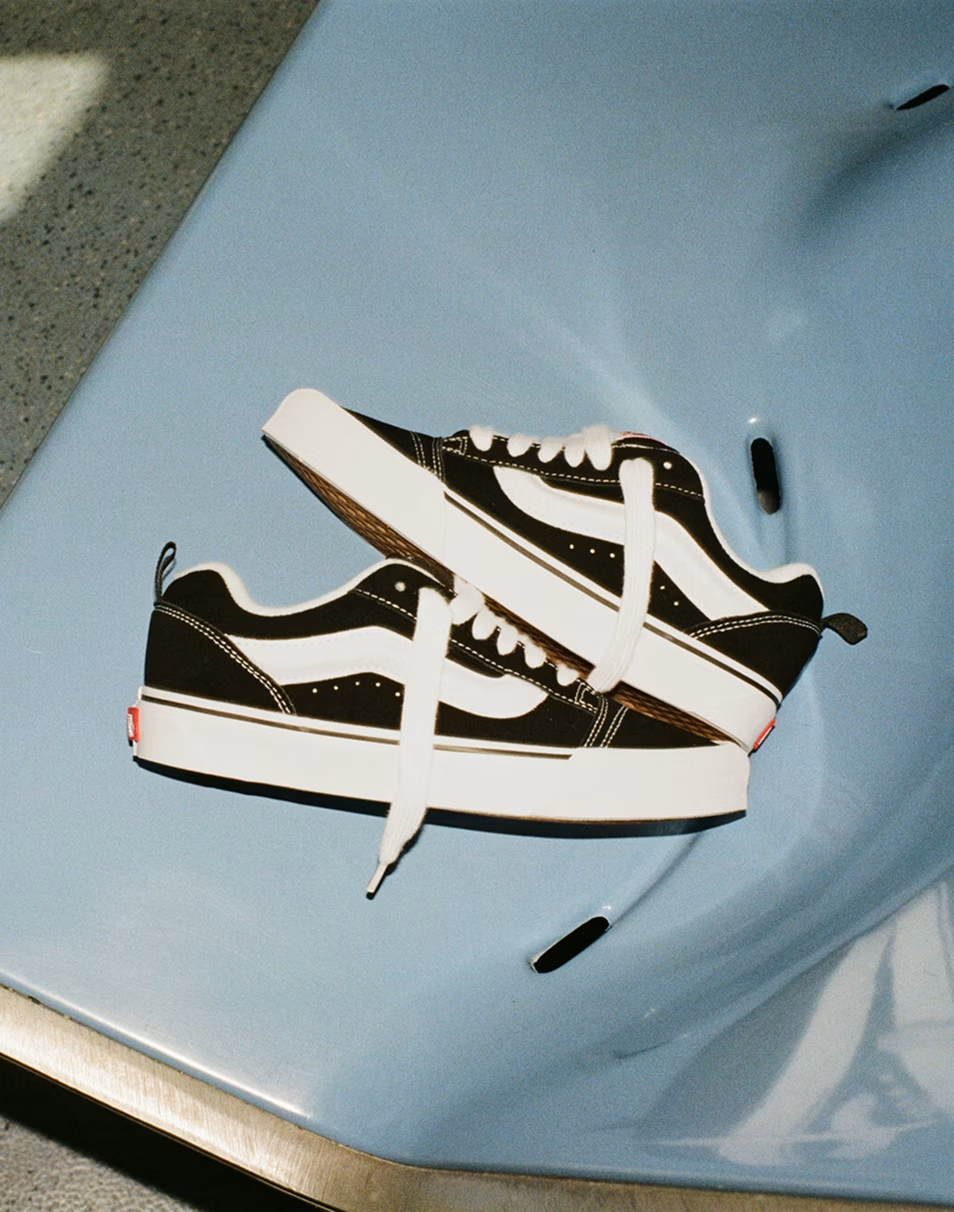
The sneaker market is crowded.
There are performance brands, luxury brands, fashion labels and smaller independent companies competing for attention.
New silhouettes appear all the time.
So why haven’t Vans disappeared?
One reason is that the brand isn’t completely dependent on whatever sneaker trend happens to be popular this month.
Its strongest designs have become classics.
That’s a huge advantage.
When a sneaker becomes recognizable enough, customers don’t necessarily need to be convinced that it’s fashionable.
They already know it.
The Old Skool doesn’t have to become the newest trend every year.
People already understand what it is.
That gives Vans a level of stability that many newer brands don’t have.
Vans vs Converse: Which Brand Is Better?
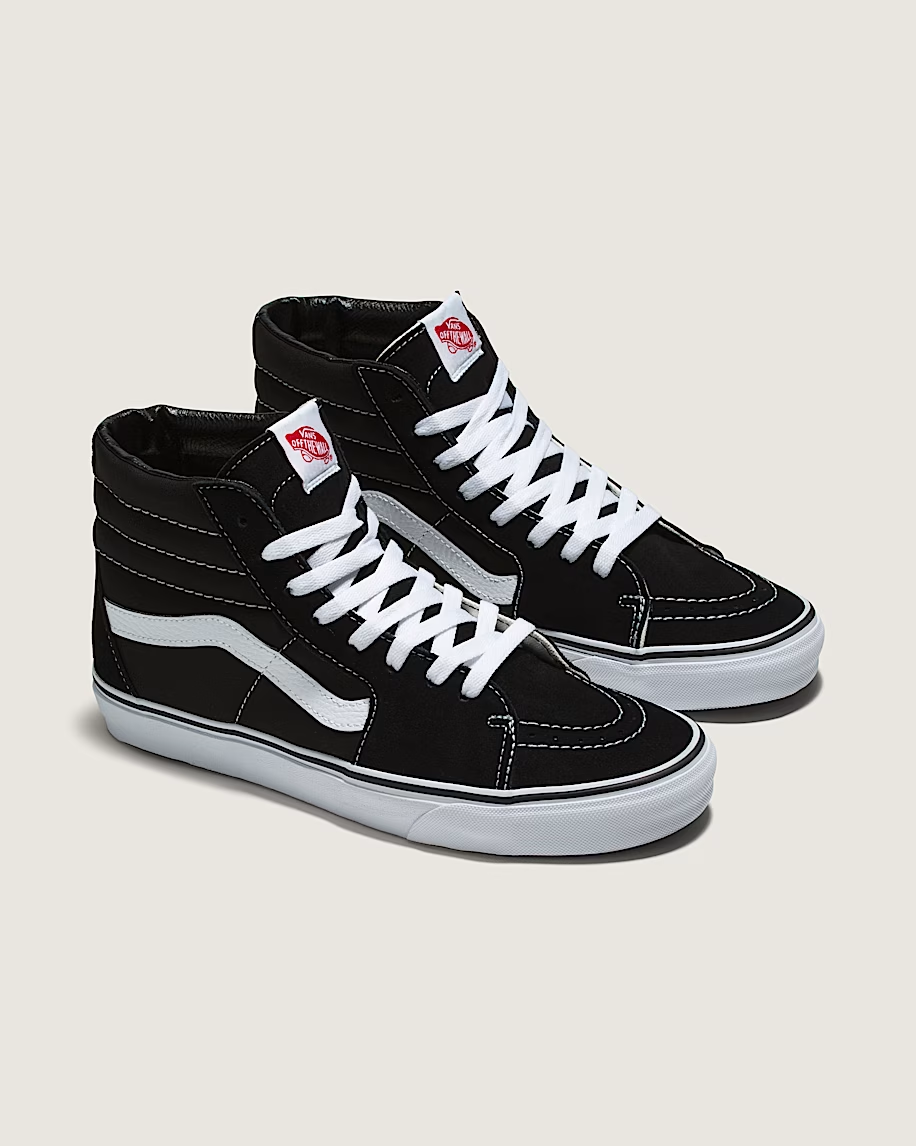
This is one of the most natural comparisons because both brands have strong cultural histories and classic casual sneakers.
Converse is particularly associated with the Chuck Taylor All Star.
Vans is strongly associated with styles such as the Old Skool, Authentic and Slip-On.
Both brands offer relatively simple designs that have remained recognizable for decades.
So which is better?
It depends on your style.
If you prefer the classic canvas look of Converse, you may naturally gravitate toward Chuck Taylors.
If you prefer skate-inspired styling and the Vans side stripe, Vans may be the better choice.
There are also differences in how individual models feel on the foot.
Some people prefer one brand’s fit over the other.
This is why I wouldn’t say one brand is universally better.
They’re competing in a similar lifestyle space but have different identities.
Vans may be better if you want:
A stronger skateboarding connection, recognizable Old Skool styling, checkerboard patterns and a slightly more skate-inspired aesthetic.
Converse may be better if you want:
The classic Chuck Taylor silhouette, a more traditional canvas sneaker appearance and the unmistakable Converse star branding.
For everyday fashion, both are strong options.
Vans vs Nike
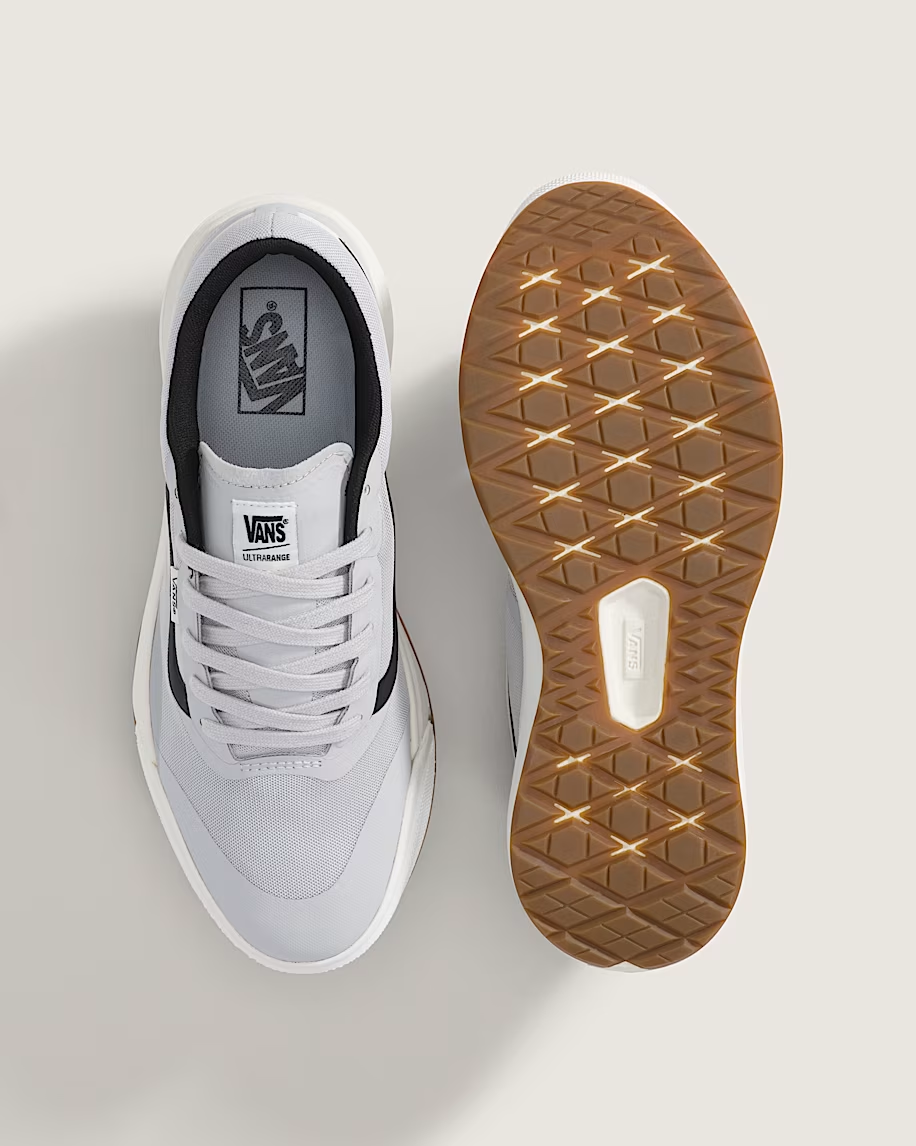
This comparison is a little different.
Nike has a much broader product range and is heavily associated with athletic and performance footwear.
If you need running shoes, basketball shoes or highly cushioned training footwear, Nike has many models specifically designed for those activities.
Vans has a narrower identity.
Its strength is casual footwear and skateboarding.
So if someone asks which brand is better overall, there isn’t really a useful single answer.
Nike is the more versatile performance brand.
Vans is arguably more focused in its classic lifestyle identity.
Someone who wants one sneaker for casual outfits may prefer Vans.
Someone who wants a shoe that can move between training, sports and everyday use may have more reasons to consider Nike.
Again, the purpose matters more than the logo.
Vans vs Adidas
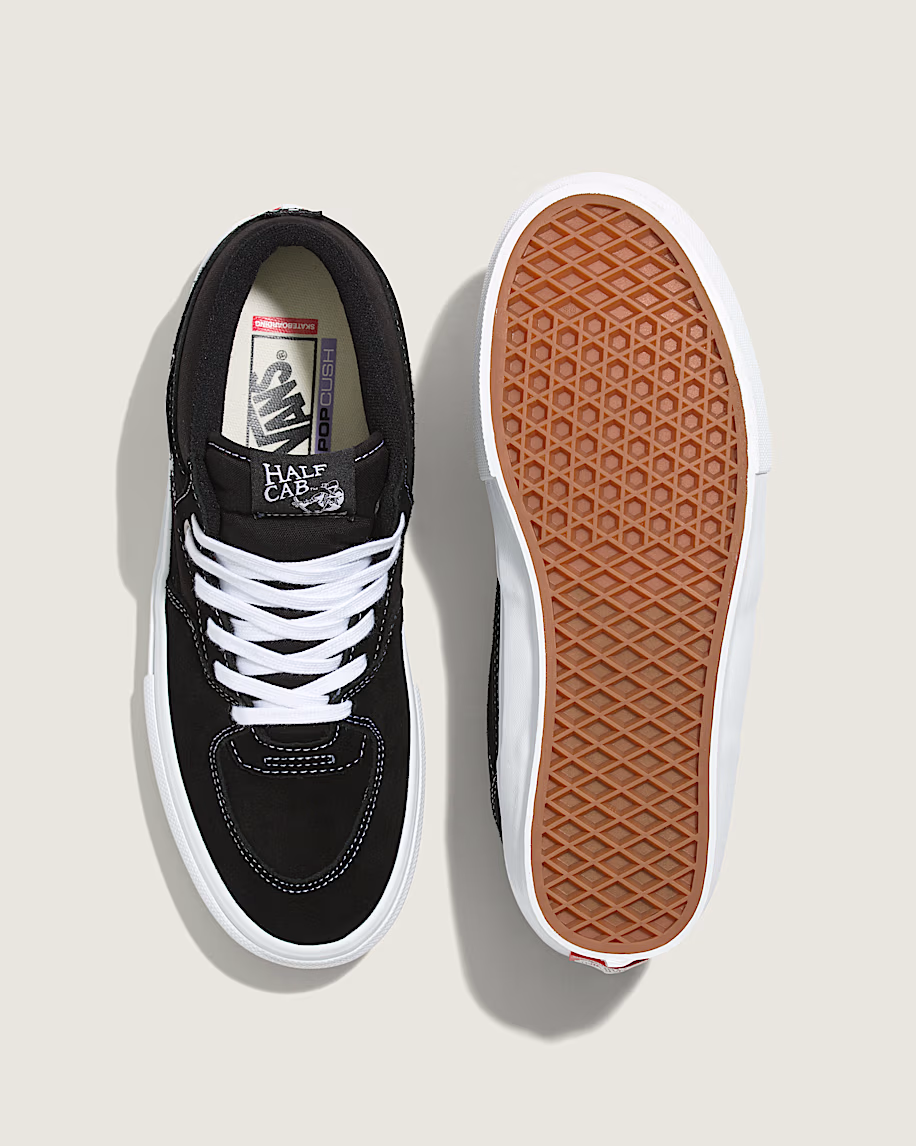
Adidas also has a large lifestyle sneaker range, including several classic silhouettes that have become fashion staples.
Adidas often combines sports heritage with lifestyle fashion.
Vans comes from a more specific skateboarding and action-sports background.
If you’re looking for classic athletic-inspired sneakers, Adidas may have more choices.
If you prefer the straightforward skate-inspired look, Vans may feel more natural.
Both brands have strong cultural recognition.
The choice often comes down to personal style.
Pros and Cons of Vans Shoes
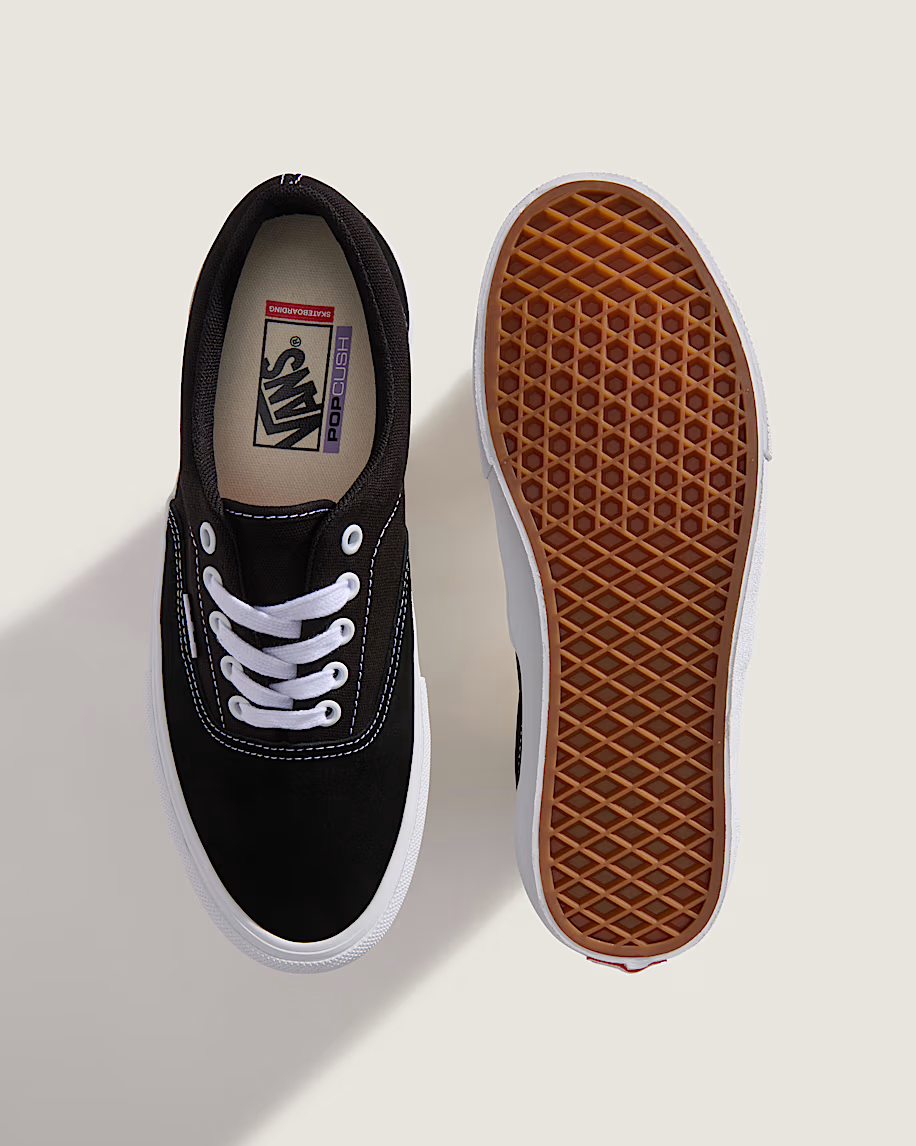
Pros
- Iconic and easily recognizable designs
- Strong skateboarding heritage
- Easy to style with casual clothing
- Large selection of colors and patterns
- Classic models have remained relevant for decades
- Suitable for everyday casual wear
- Generally more accessible than many premium sneaker brands
- Strong connection with streetwear and youth culture
- Many different styles are available
- Collaborations provide additional variety
Cons
- Classic models may feel less cushioned than modern performance sneakers
- Not every Vans shoe is ideal for long-distance walking
- Some models can show wear with heavy everyday use
- Fit and comfort can vary between models
- Certain collaborations and premium versions can become expensive
- Traditional styles may not provide the support some people need
Who Should Buy Vans?

Vans makes the most sense for someone looking for a casual sneaker with a strong visual identity.
If you enjoy streetwear, skate-inspired fashion or simple everyday outfits, Vans are easy to consider.
They’re also a good option if you want a sneaker that doesn’t look dramatically different every season.
The classic styles have a certain timeless quality.
You can buy them today and still wear them years from now without feeling like you’re wearing an obviously outdated design.
That’s one of the strongest arguments in their favor.
Who Might Want a Different Brand?
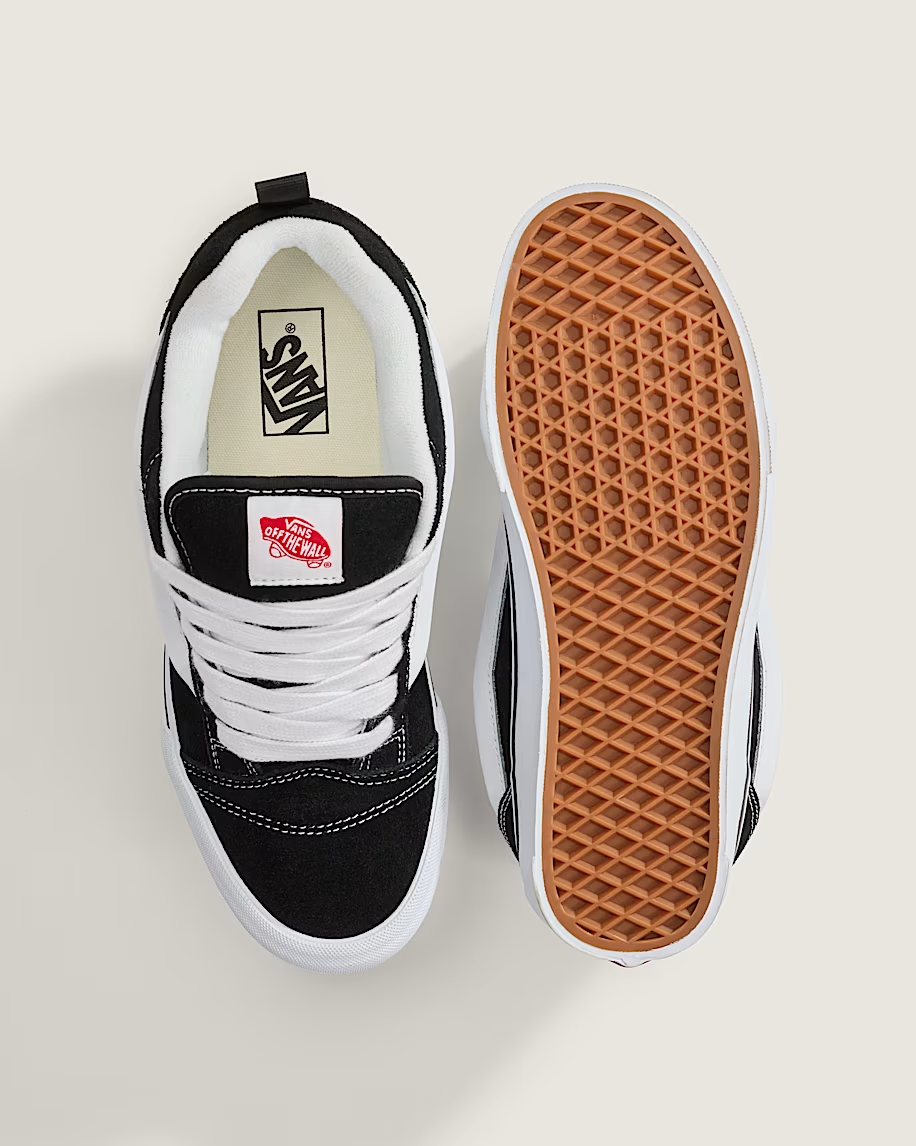
Vans may not be the right choice if your main priority is athletic performance.
If you’re buying a sneaker specifically for running, long-distance walking, serious gym training or a particular sport, you should look at shoes designed for that activity.
The same goes for people who need a lot of cushioning or specialized support.
A classic Vans shoe isn’t trying to be a medical or performance shoe.
It’s a lifestyle sneaker with skateboarding roots.
Understanding that makes it much easier to decide whether it’s right for you.
Why Vans Have Such a Strong Identity

Think about the number of things that have changed since Vans became popular.
Music has changed.
Fashion has changed.
Skateboarding has changed.
Sneaker technology has changed.
Social media has changed the way trends spread.
Yet you can still recognize a classic pair of Vans almost immediately.
That’s the result of consistent branding.
The brand has changed enough to stay interesting but not so much that it loses its identity.
That’s probably one of the biggest reasons Vans continues to work.
It feels familiar without being completely stuck in the past.
The Power of Nostalgia

For longtime Vans customers, there’s also an emotional element.
Someone may remember buying their first pair for school.
Another person might associate Vans with concerts or skateboarding.
Someone else may simply remember seeing the shoes everywhere when they were growing up.
That nostalgia can bring customers back.
And when a brand becomes part of someone’s personal memories, price isn’t always the only consideration anymore.
They aren’t just buying a sneaker.
They’re buying something familiar.
That’s difficult for a new brand to reproduce.
Vans Doesn’t Need Everyone to Love Them

Another interesting thing about Vans is that the brand doesn’t necessarily need to appeal to every sneaker customer.
It has a clear identity.
Some people love chunky performance sneakers.
Some prefer minimalist shoes.
Some want luxury fashion sneakers.
And some simply want Vans.
Having a clear personality can actually be an advantage.
The people who like the aesthetic know exactly what they’re looking for.
That creates a loyal customer base.
Why the Classic Styles Remain Important
A lot of fashion brands eventually abandon older designs in favor of new products.
Vans has been able to keep its classic silhouettes relevant while introducing new versions.
That’s a smart strategy.
The classic designs attract people who want the traditional Vans look.
New materials, colors and collaborations give existing customers reasons to keep looking at the brand.
It’s a balance between familiarity and novelty.
And that balance is one reason Vans doesn’t feel like a brand that has stopped evolving.
Are Vans More About Fashion Than Performance?
For most classic models, I would say yes.
That isn’t a criticism.
It’s simply the category they’re strongest in.
Vans became popular because of skateboarding, but its classic shoes have become lifestyle products.
People wear them to school, work, shopping trips, concerts, vacations and social events.
They aren’t necessarily choosing Vans because they need the most advanced footwear technology.
They’re choosing them because they like the way the shoes look and fit into their lifestyle.
That’s a perfectly valid reason to buy a sneaker.
Are Vans Worth Buying?
For the right person, yes.
The strongest reason to buy Vans isn’t necessarily technology.
It’s the combination of style, familiarity and versatility.
A classic pair can remain useful in your wardrobe for years because the design doesn’t depend entirely on a short-lived trend.
And because Vans has so many different styles, you’re not limited to one particular look.
The Old Skool gives you the iconic side stripe.
The Slip-On offers a different, simpler appearance.
The Authentic keeps things understated.
There are also skate-focused models and newer designs for people who want something different.
That gives the brand enough variety without losing its recognizable identity.
Final Verdict: What Makes Vans So Popular?
After looking at the history, design, comfort, culture and everyday appeal, I think Vans’ popularity comes down to one simple idea:
They know what they are.
Vans doesn’t need to be everything.
It doesn’t need to be the best running shoe.
It doesn’t need the thickest cushioning.
It doesn’t need to reinvent its classic designs every year.
Instead, it has built a recognizable style around skateboarding, casual fashion and self-expression.
The result is a sneaker brand that can appeal to skateboarders, teenagers, streetwear fans, casual shoppers and people who simply want a reliable-looking everyday sneaker.
That broad appeal explains why Vans has remained relevant for so long.
The classic designs are familiar.
They’re easy to style.
They’re connected to a genuine cultural history.
And most importantly, people continue to enjoy wearing them.
⭐ Overall Rating: 4.5/5
Style: 4.8/5
Versatility: 4.7/5
Cultural Appeal: 4.8/5
Comfort: 4.1/5
Value: 4.4/5
Everyday Wear: 4.5/5
Vans isn’t necessarily the perfect sneaker for everyone, but it’s easy to understand why the brand has such a loyal following.
Frequently Asked Questions
Vans are popular because of their recognizable designs, skateboarding heritage, versatility and strong connection with streetwear and youth culture.
Yes. Classic Vans styles remain popular because their designs aren’t heavily dependent on short-term fashion trends.
Many people find Vans comfortable for casual everyday wear, although classic models generally don’t provide the same level of cushioning as modern running or walking shoes.
Yes. Their simple designs work well with jeans, shorts, casual trousers and many streetwear outfits.
Vans can work for normal everyday walking, but people who regularly walk long distances may prefer shoes specifically designed for walking or running.
Vans has a long history in skateboarding, and many of its shoes have been designed with skateboarding in mind. This genuine connection helped establish the brand within skate culture.
For someone looking for a versatile casual sneaker with a classic design, Vans can offer good value. The value depends on the model and how frequently you wear it.
Neither is universally better. Vans has a stronger skateboarding identity, while Converse is particularly associated with classic Chuck Taylor designs and its basketball heritage. The better choice depends on your preferred style.
